
The Hope Issue

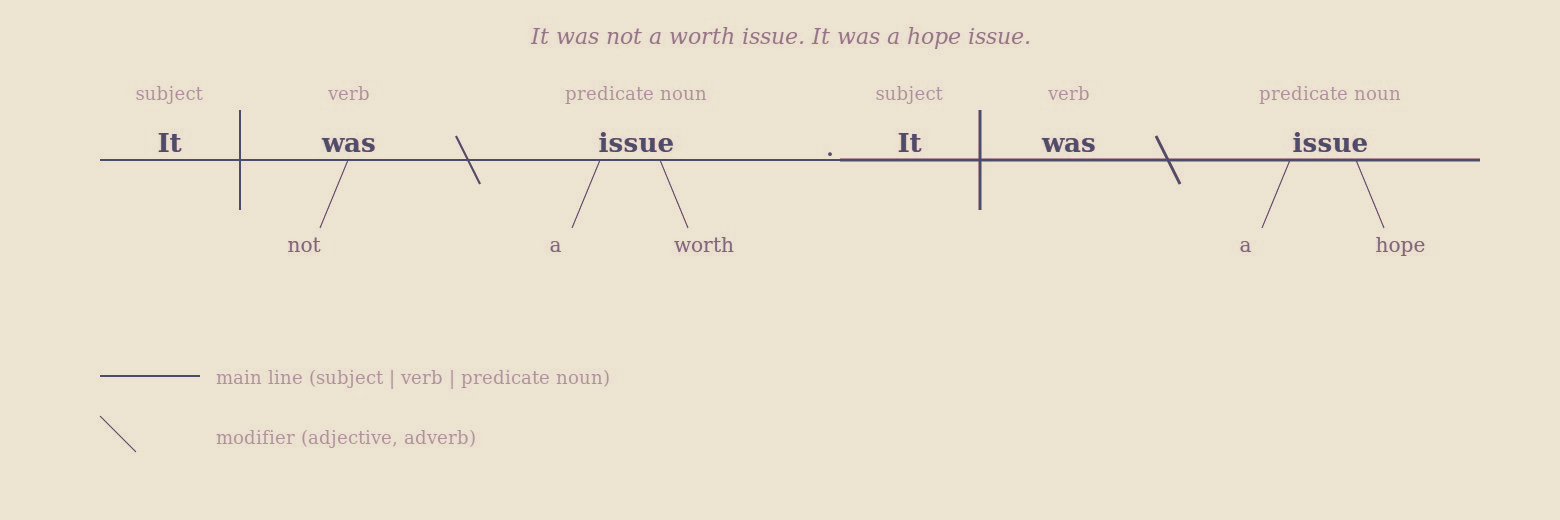
It was not a worth issue. It was a hope issue.
I could not sleep. I have been here before: lying in the dark after a win so real I should have been able to feel it, trying to get to the core of something I could not name. The sacrifice was real. The success was real. And I lay there unable to hold either one still long enough to look.
I gave up social media a long time ago. The only doom scroll I have left is LinkedIn.
There he was.
I caught my breath. Confused but certain. I rewatched it. Contentment. Fully formed, fully arrived. I had not been on the sidelines watching him build it. I had been so far from all of it that his image was jarring. The boy I remembered and the man on the screen with no bridge between them.
He had long curly hair. He was defiant. He was precise and also weirdly philosophical. Our debates were often about nature versus nurture. I went with him to a grad school interview. I was so proud of him.
And then he cut it.
A part of me thought he abandoned himself - the raw, wild, true version. And then I saw his face on the screen. I wondered if I had been wrong. I hoped so.
The breakup redirected me. I left. I chose.
I had to.
Claudette.
She had short dark hair. She brought me to the energy and realness I had been starving for. I don’t remember the meeting. I remember how she made me feel. Seen. Sane. Safe. Talented.
She was the first person who told me it should not be this way.
Self-trust, Keira, is the foundation. Everything else is built on someone else’s ground.
He shouldn’t treat you that way. You can stay. I believed her. I left anyway. It was cleaner.
I stepped off the stage.
I landed in nonprofit because I believed it was cleaner than politics. It was warm and feminized and intentional. It was also a structure. Like the ones I had studied. But I was living inside it now, not analyzing it from the outside. And that is not the same education.
I knew the theory. I did not yet know the feeling.
The very quality that allows you to create change also prevents you from recognizing when change is no longer occurring. Hope is not a character flaw. It is what mission-driven institutions select for. The most hopeful people do the most work. Carry the most load. Stay the longest. Absorb the most harm.
That is not accidental. That is architecture.
Was I misaligned? Too visible? Not ambitious enough? Too ambitious?
What does it do to you to believe an institution will become what it promised.
Not for years. For decades.
It makes you less.
Lance.
He ran the place. The place was running him. Even at the helm there was no peace.
We were in LA. A million dollar gift had just closed. Candlelight. High tops. We clinked glasses. The note lingered in the air. He congratulated us before he spoke.
Then he told me he felt like a puppet. Twenty-five years of someone else’s shadow.
I said: me too.
Another night. A hotel bar. White lights above mahogany. Red wine. No one really there. Just us. I told him I was missing my son’s first birthday.
He apologized.
She came early. Three pounds. I came back.
Two people walked into that room. Only one of us walked out. He stayed. I left. And when I was gone, he let me go too.
Maybe sometime, Keira. After all this settles. We can meet for a glass of wine and talk.
He landed his dreams. So did I.
I was redirected at the exact moment I was beginning to become myself. Free to dance with the woman I would become.
I married her. First and last. When you walk in your truth and leave the traditional and cultural behind, the ones you were raised inside, you may lose them. The two cannot always coexist peacefully. It is not sacrifice, necessarily. But it always hurts.
I jumped through every hoop the world required and landed in a life that was always mine.
That is not a hope issue.
That is a hope practice.
The institution was never waiting to become what it promised.
She was.
A Note on the Architecture
The burnout literature identifies the stages: enthusiasm, stagnation, frustration, apathy. The nonprofit sector acknowledges the cycle, workers entering full of hope and leaving exhausted, and treats it as inevitable. Self-object theory describes what happens when a person builds her sense of self on borrowed ground. And what it costs when the ground shifts.
Together, they describe the symptoms with remarkable precision. They do not quite describe the mechanism.
The mechanism is this:
Mission-driven institutions recruit through hope. They signal care, belonging, and purpose. The people who respond most strongly to those signals are the people who already carry the most hope. They self-select in. They stay longest. They work hardest. They absorb the most harm. Their hope is not incidental to how the institution functions. It is the fuel.
This is not a conspiracy. No one designs it this way. But the system does not need to be designed. It only needs to be structured. And it is. The most hopeful people are often the most useful to institutions that run on mission. Hope allows them to tolerate uncertainty, extend patience, and continue investing long after others would walk away. They fill the gap between what the institution promises and what it delivers. They do this for years. Sometimes decades. And they call it commitment.
Hope inside a mission-driven institution is not just a psychological state. It is an organizational resource. It is recruited, concentrated, converted into labor, and recycled back into the mission. The institution attracts hope, runs on hope, and reproduces hope, because hope is what keeps people inside the system long enough to carry it.
That is the part no one names.
The traditional framing asks the individual to adjust. Accept reality. Manage expectations. Find coping strategies. The question it never asks is: what if the problem was not that you hoped too much, but that you hoped outward, toward a structure that could not hold it, instead of inward, toward yourself?
A hope issue begins when hope is outsourced. It is projected onto an institution, a relationship, a version of the future that was always someone else’s to grant. When the institution fails, the hope appears to fail with it. That is the disillusionment the literature studies. That is what the sector calls burnout and calls inevitable.
A hope practice is something else. It is what remains when the external anchor is gone. It is the retrieval. The redirection. The slow recognition that the thing you were waiting for the institution to become was always what you were becoming.
It was never theirs to give.
I did not lose hope when I left. I found where I had left it.
Trust the reader. Cut until it hurts. Earn the silence.